
Mercedes Begins New Era With Dominance: 8 Takeaways From F1 Season Opener
Russell’s victory signals genuine title potential, yet Ferrari’s pace and strategic variables hint that the fight may be far from settled.


1. Mercedes Announces Its Return With a Statement 1–2
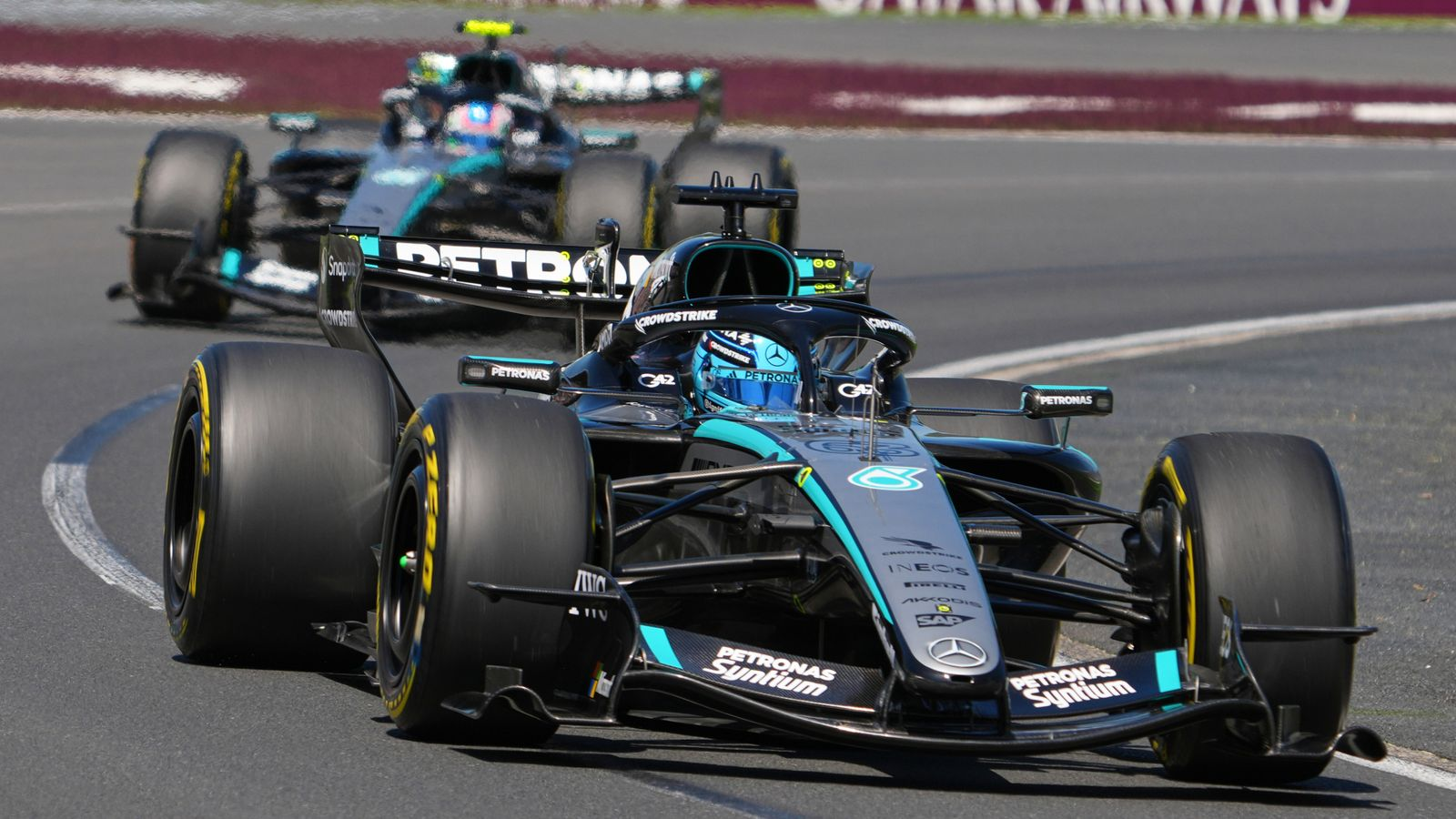
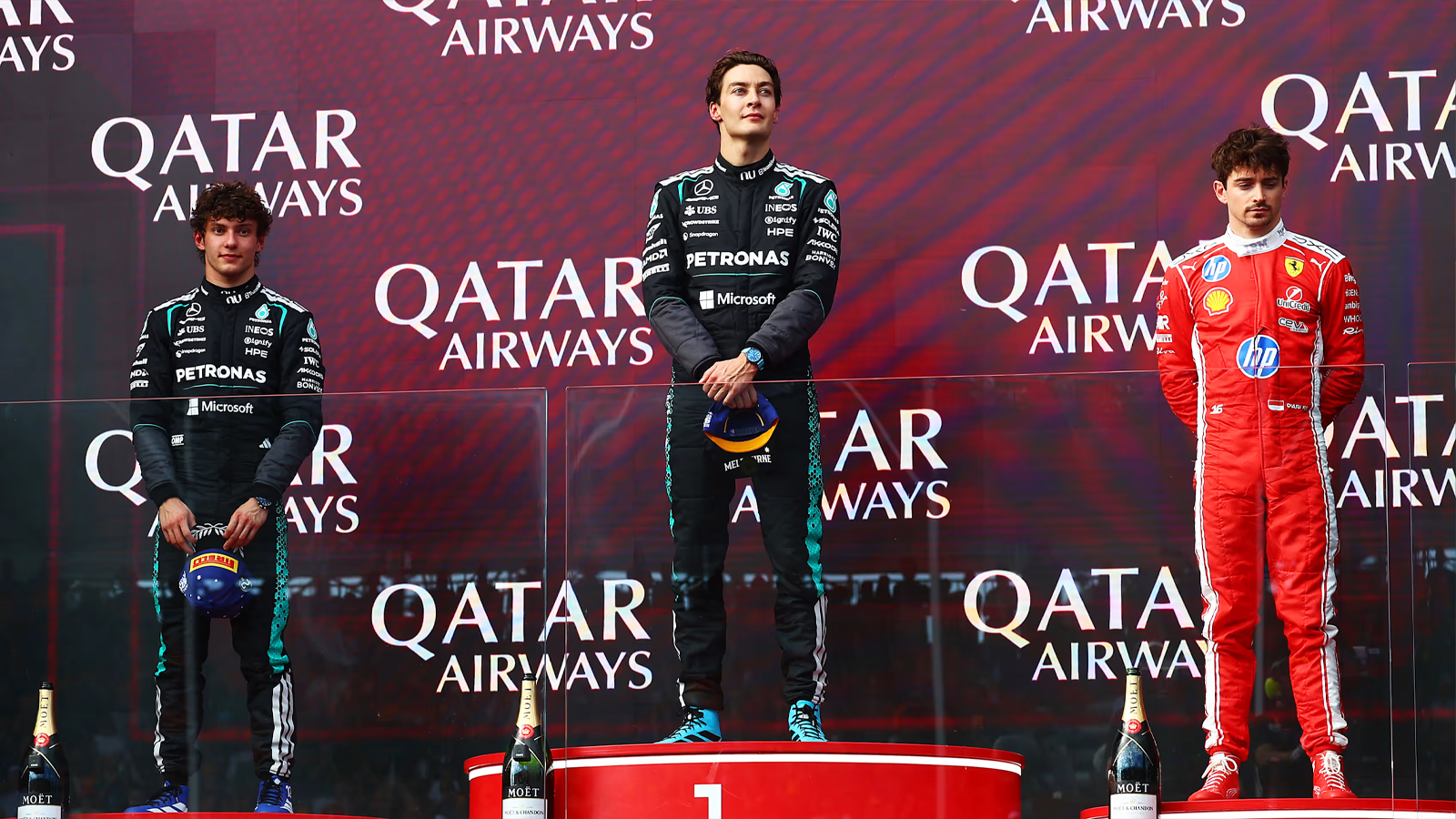
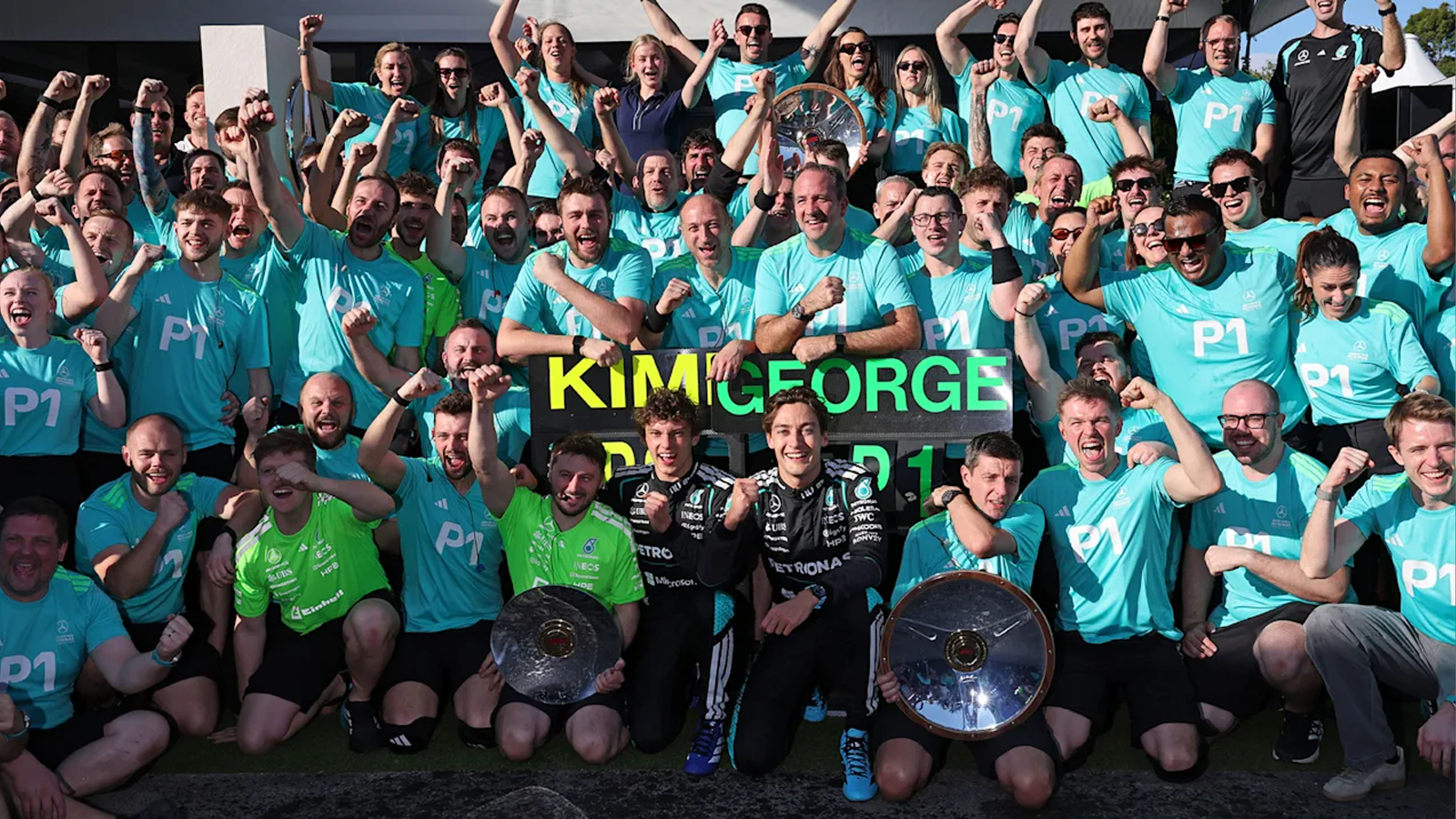
The opening race of Formula 1’s new regulations era ended with a familiar sight: a Mercedes one-two finish. George Russell led teammate Kimi Antonelli across the line at Albert Park, delivering the team’s most convincing victory in years. For team principal Toto Wolff, the moment carried extra weight after several seasons spent chasing the front rather than leading it. “It’s been a long time since we felt like we had a car capable of fighting for a world championship,” Wolff said after the race.
The result also echoed Mercedes’ dominant run from 2014 through 2021, when the team collected eight consecutive constructors’ titles. While one race does not define a season, the performance in Melbourne suggested the Silver Arrows may once again be operating from a position of strength.
2. George Russell Looks Ready To Lead a Title Charge
Russell has waited four seasons for a car capable of delivering a serious championship campaign. His performance in Melbourne reinforced the idea that 2026 could finally be that opportunity. Russell converted pole position into victory while managing tire wear, strategy, and pressure from Ferrari early in the race.
Despite the result, Russell downplayed the significance of the win. “It just feels like another race win,” he said afterward. “We’re race one into a very long season.” Still, the early pace advantage combined with Russell’s growing experience suggests Mercedes finally has the ingredients for a sustained title challenge.
3. Ferrari Showed It Can Still Challenge
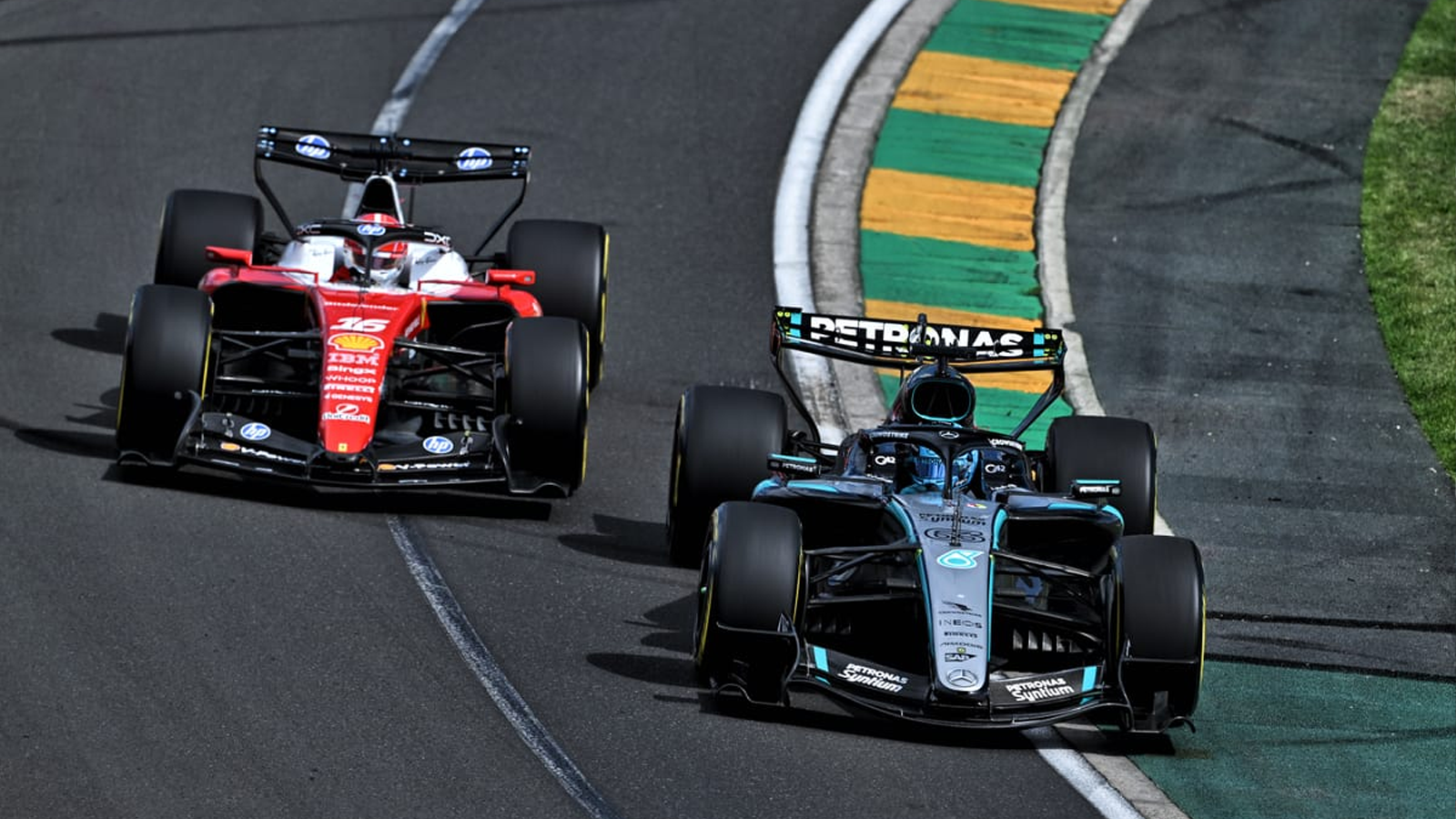
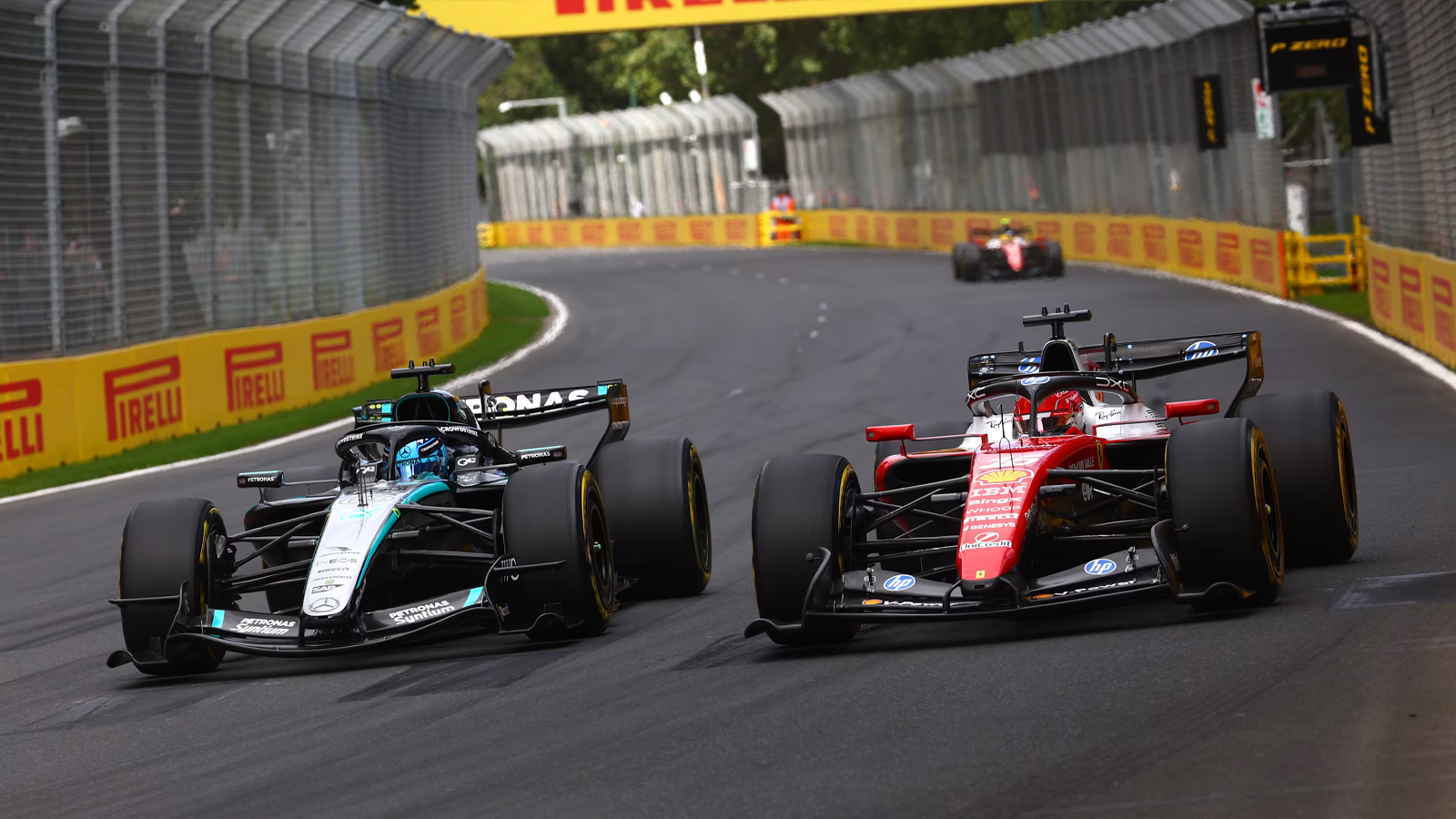
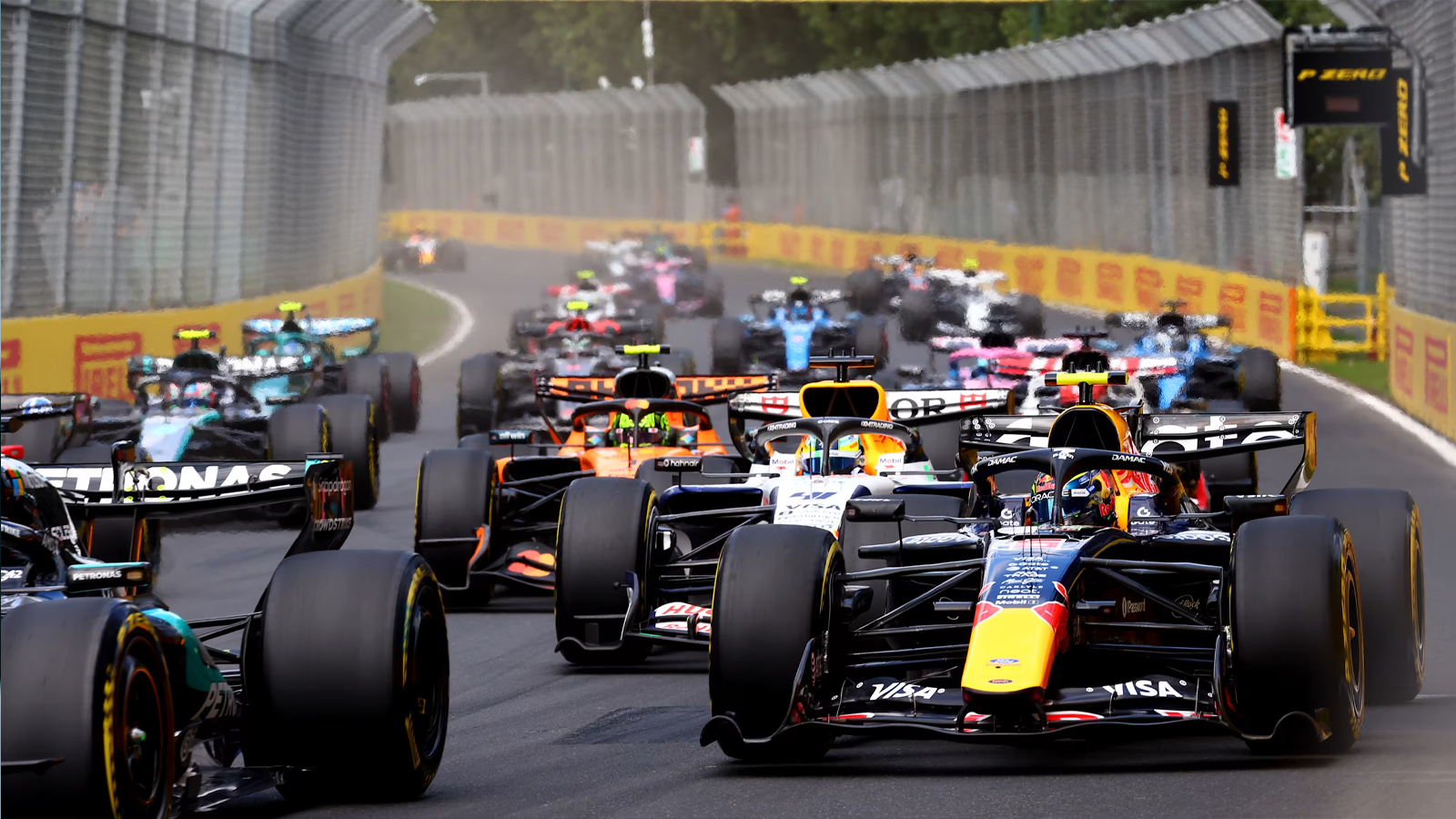
Although Mercedes dominated the final result, Ferrari demonstrated enough speed to keep the season interesting. Charles Leclerc’s launch off the line was particularly impressive, vaulting from fourth to first by the first corner. For the opening stint, he and Russell traded the lead multiple times in a tight battle that hinted at a genuine rivalry.
Ferrari team principal Fred Vasseur acknowledged Mercedes’ superior pace but maintained that the gap was not insurmountable. “The pace of Mercedes was better than us,” he admitted, “but perhaps we are able to fight with them more at the beginning.” That early duel suggested Ferrari may remain Mercedes’ most consistent challenger as the development race unfolds.
4. Strategy Helped Turn the Race in Mercedes’ Favor
The defining moment of the race came during an early virtual safety car period. Mercedes used the opportunity to pit both Russell and Antonelli on Lap 11. Because the field must slow during a VSC, pitting drivers lose significantly less time than they would under normal race conditions.
Ferrari, meanwhile, stuck to its planned mid-race stop in an attempt to execute a one-stop strategy. By the time Leclerc eventually pitted, the Mercedes pair had already built a substantial advantage. What began as a tight fight quickly transformed into a controlled race for the Silver Arrows.
5. Antonelli’s Rookie Performance Was a Major Highlight
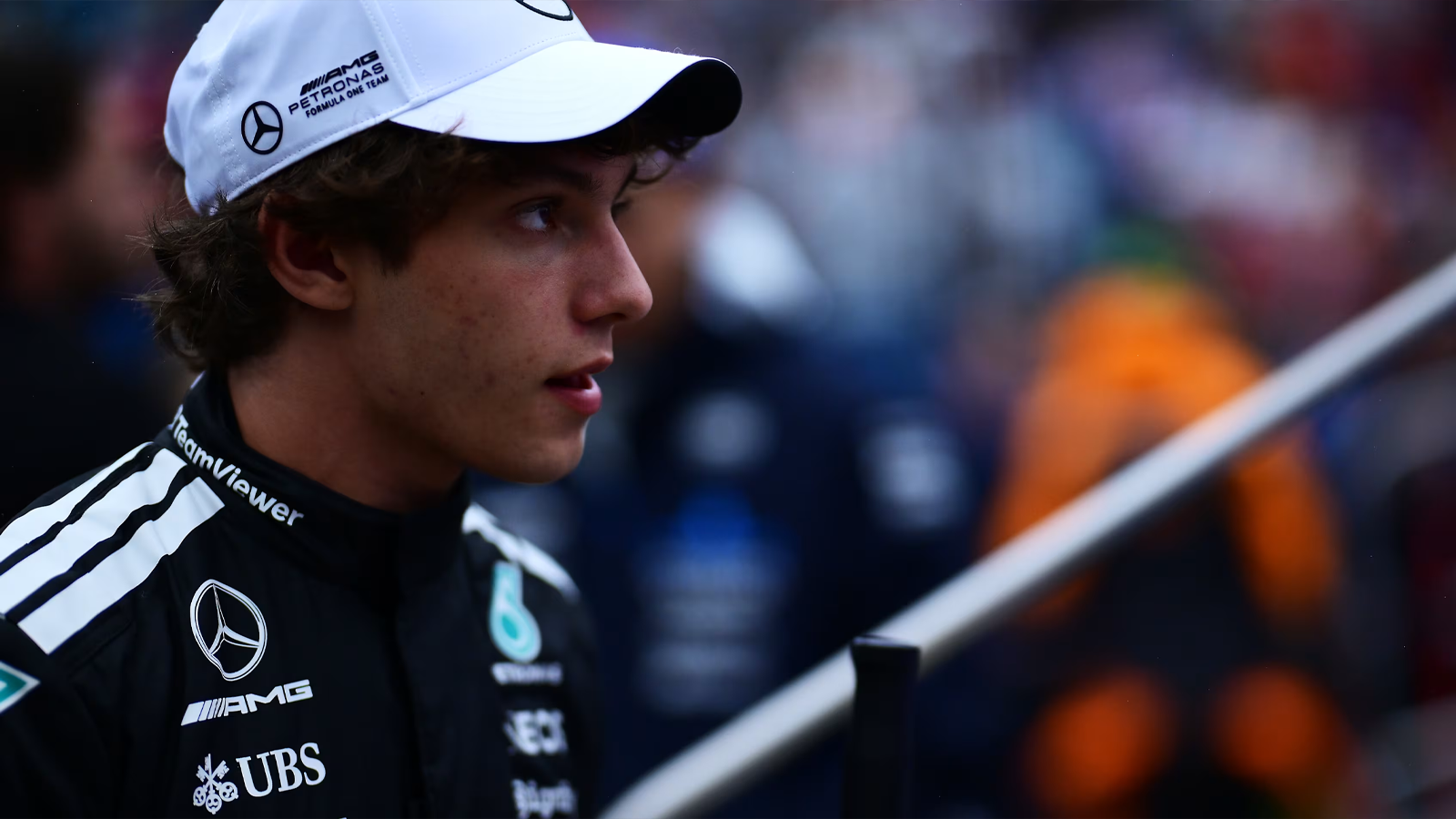
Kimi Antonelli’s second-place finish marked an impressive start to his first full Formula 1 campaign. The young Italian briefly dropped down the order after a slow start but recovered quickly and remained firmly in contention throughout the race. His calm execution and strong pace reinforced expectations that he will soon become a regular contender at the front.
Many observers believe it is only a matter of time before Antonelli claims his first Grand Prix victory. For Mercedes, having two competitive drivers could prove crucial in a long championship battle.
6. The Mercedes Power Unit May Be the Early Benchmark
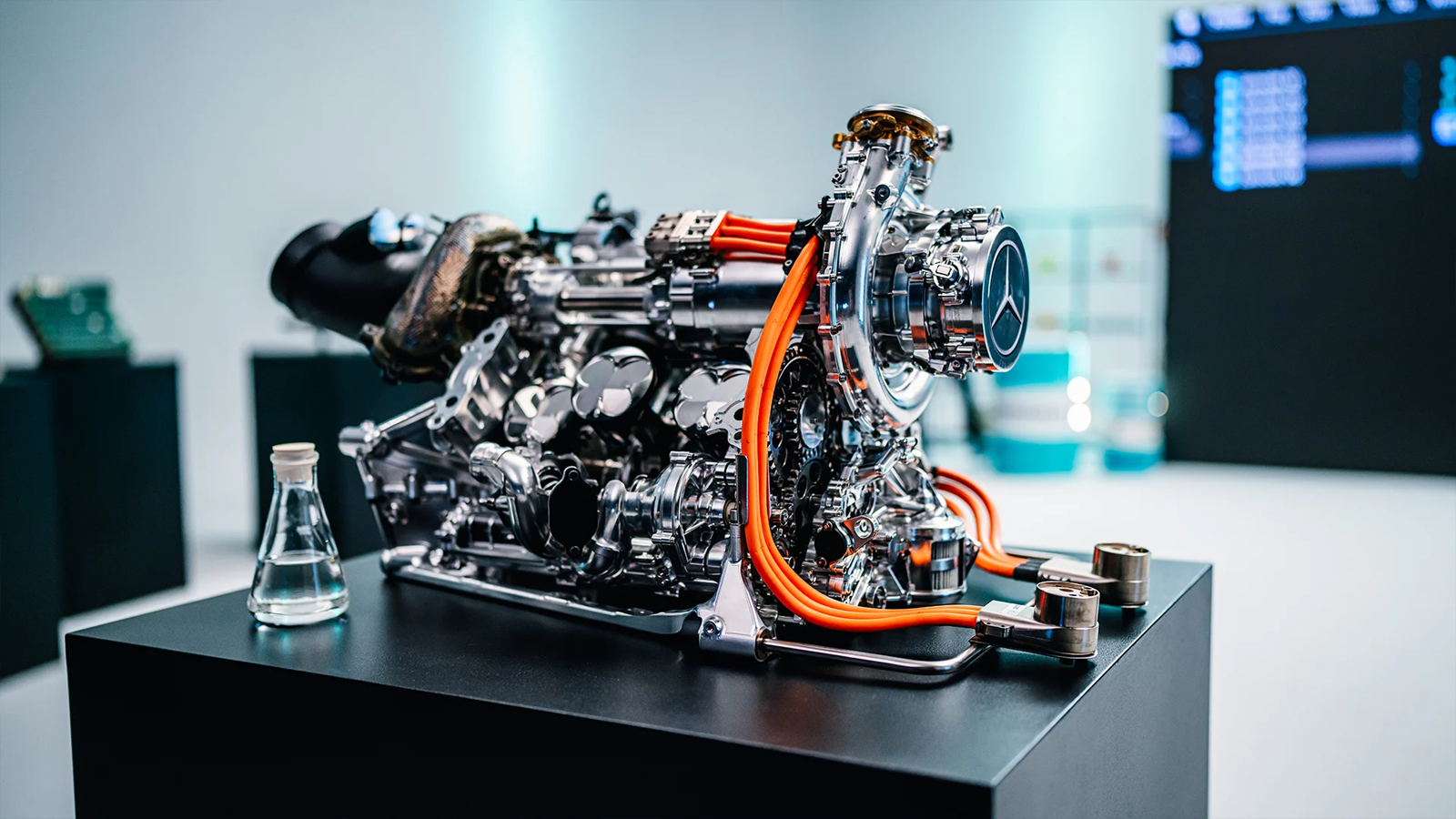
One of the biggest talking points from Melbourne was the performance of Mercedes’ new power unit. Even teams using the same engine package appeared unable to extract the same level of performance. McLaren’s Lando Norris finished over 50 seconds behind Russell and estimated his team was roughly half a second per lap slower.
Mercedes debuted its latest engine specification during the final pre-season test, while customer teams only received it at the start of the race weekend. Optimizing the complex new systems will likely take time. For now, Mercedes appears to have an early advantage in both chassis and powertrain integration.
7. The New Rules Are Already Dividing Opinion
While the race itself delivered moments of excitement, the new Formula 1 regulations remain controversial among drivers. The power unit systems and energy management requirements have made the cars far more complex to operate. Onboard footage revealed unusual behavior, including cars decelerating even while drivers remained on full throttle due to energy harvesting. Several drivers described the experience as counterintuitive and overly complicated.
However, Melbourne is considered an especially difficult track for the new machines, meaning future races may present a clearer picture of how the regulations perform.
8. The Competitive Picture Could Still Change Quickly
Despite Mercedes’ strong start, the championship battle may not be settled as quickly as the final gap suggests. Melbourne’s layout places unusual energy demands on the new hybrid systems, forcing teams into compromises that may not apply at other circuits.
Upcoming races, such as the Chinese Grand Prix, could reveal a different competitive order. Russell himself acknowledged that Ferrari might be closer than qualifying suggested. “Ferrari, definitely, they’re in the mix,” he said. If development progresses quickly across the grid, the opening race could prove to be only the first chapter in a far more competitive season.